YuSleep Review (2026): What I Noticed After 3 Months of Regular Use
Contents
YuSleep
49 USD
Pros
- Ten-ingredient formula in one serving
- Moderate 0.9 mg melatonin dose, clearly labeled
- Easy liquid format: just 2 droppers before bed
- 60-day money-back guarantee
- Best value with the 6-month package (about $1.60 per night)
Cons
- Seven ingredients share an undisclosed blend (637 mg)
- Minimum order is a 2-month supply
- Return shipping is paid by the customer
YuSleep Review: Introduction and Quick Verdict
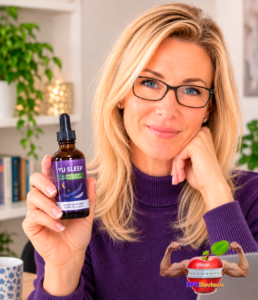 In this YuSleep review, I look at a liquid sleep supplement that stood out from a crowded field. I have reviewed a lot of sleep supplements, and after a while they start to blur together. One active ingredient, usually melatonin, pressed into a tablet. A label full of promises. Not much explanation of why this bottle should work any better than the last one. YuSleep caught my attention for more practical reasons. It is a liquid, so there are no capsules to count. It combines ten ingredients in one measured serving. And it puts the melatonin dose right on the label, which is not something I can say about every product in this category.
I did not want to write about it from a spec sheet alone, so I took it myself for three months. This YuSleep review covers what I found: what is in each serving, what the research says about those ingredients, how the product is priced and sold, what you should know before you order, and how it worked for me.
My verdict at a glance
- Helen March’s rating: 9.3 out of 10
- Recommendation: I recommend YuSleep to adults who want a well-formulated, easy-to-use nighttime supplement.
- My experience: I used it for three months. The change I could really notice arrived at around the six-week mark: my sleep improved and felt more restful, the daytime tiredness lifted, and I started waking up feeling alert and fresh. I did not notice any side effects.
- Best value: The 6-month package ($294) works out to roughly $1.60 per night.
- Lower risk: A 60-day money-back guarantee is included.
One note before we go further. Sleep is personal, and results vary from one person to the next. What follows is my research and my own experience, not a promise about yours.
What Is YuSleep?
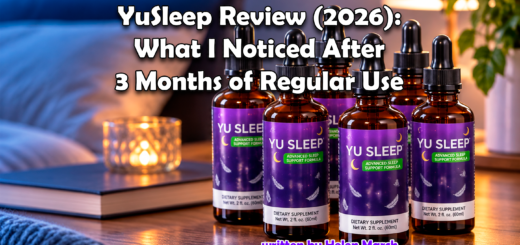
YuSleep is a liquid dietary supplement designed to support healthy sleep. A serving is 2 mL, which is two full droppers, taken about 30 minutes before bed. Each bottle holds roughly 30 servings, so one bottle covers about a month of nightly use.
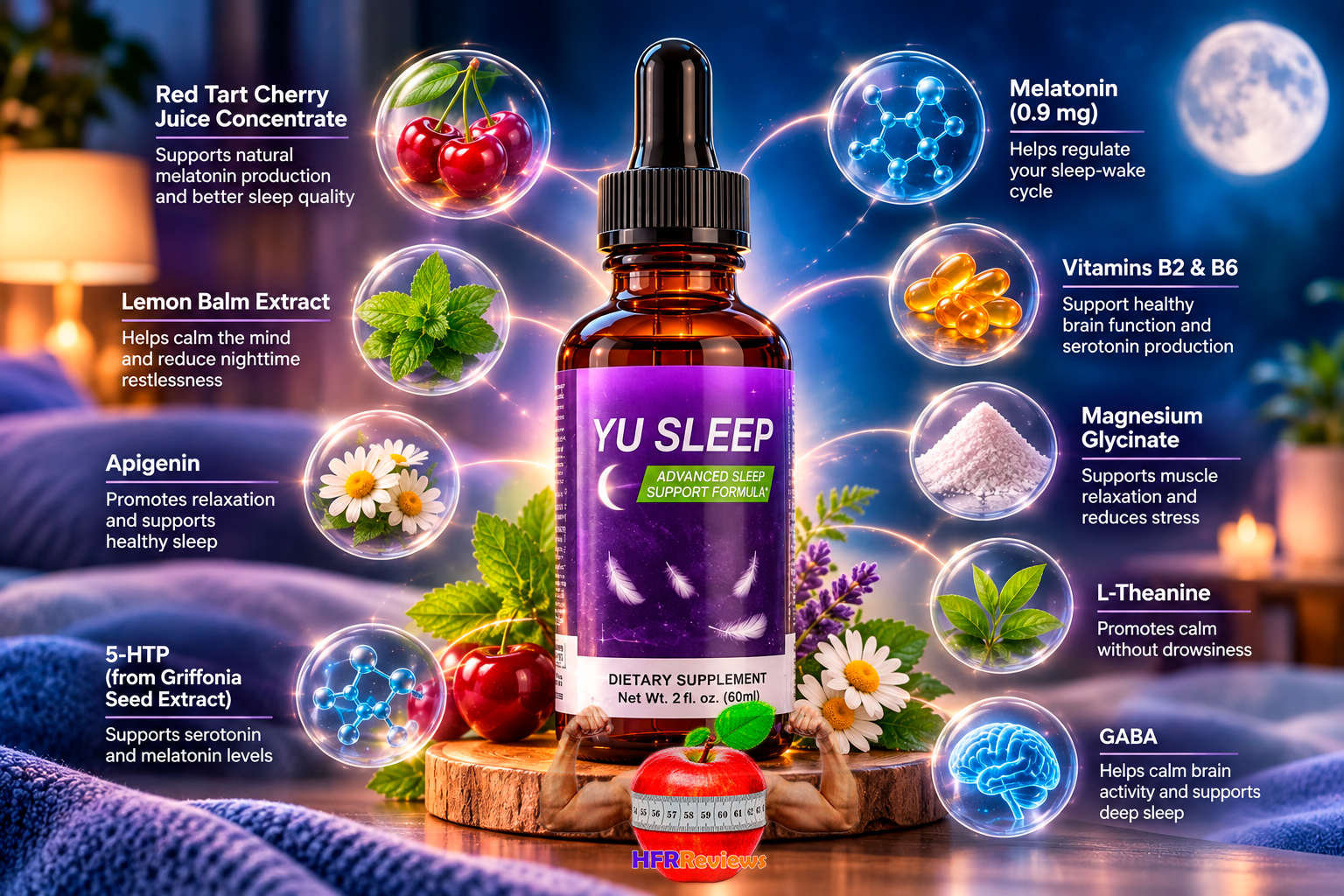
The formula has ten ingredients. Three are listed on their own: melatonin (0.9 mg), vitamin B2 and vitamin B6. The other seven sit together in a 637 mg proprietary blend: red tart cherry juice concentrate, magnesium glycinate, apigenin, lemon balm extract, 5-HTP from Griffonia seed extract, L-theanine and GABA. I go through each of them below.
The manufacturer describes YuSleep as plant-based and “nano-enhanced,” and positions it as an alternative to high-dose melatonin products that can leave people groggy the next day. I can’t evaluate the nano-delivery claim, because the official page doesn’t explain what the technology involves. What I can say is that a liquid is easy to measure, easy to take, and doesn’t require swallowing pills, which matters to a lot of people.
YuSleep is sold through the official website, getyusleep.com, with ClickBank acting as the retailer for orders. Packages start at two months. That is a deliberate choice: the company’s position is that sleep habits take time to settle, so it doesn’t sell a single bottle. I come back to what that means for your budget in the pricing section.
Who is it for? Adults who have trouble falling asleep, wake during the night, or wake up feeling unrefreshed, and who want to try a supplement alongside good sleep habits. Who should check with a professional first? Anyone who is pregnant, nursing, under 18, managing a medical condition or taking prescription medication. The safety section covers this in more detail.
YuSleep Review Quick Facts
Detail | Information |
|---|---|
Product name | YuSleep (Yu Sleep) |
Official website | |
Customer service | [email protected] (product and shipping questions); order support is handled through ClickBank |
Product category | Liquid dietary supplement for sleep support |
Customer satisfaction | Helen March’s rating: 9.3/10 |
Manufacturing country | USA |
Product composition | Melatonin 0.9 mg, vitamin B2 0.5 mg, vitamin B6 0.5 mg, and a 637 mg proprietary blend (red tart cherry juice concentrate, magnesium glycinate, apigenin, lemon balm extract, 5-HTP, L-theanine, GABA) |
FDA & GMP approved? | Dietary supplements are not FDA-approved before sale; the product carries the standard FDA disclaimer. GMP – Yes |
Money-back policy | 60 days from purchase; approval required before returning; all bottles must be sent back |
Shipping countries | United States and Canada |
Delivery time and price | US: $14.95, 5–7 working days via UPS (the FAQ lists $9.95 for a single bottle; free shipping is listed for 3- and 6-bottle orders). Canada: $29.95, 14–21 working days |
Recommended supply | 3 to 6 months (the minimum package is 2 months) |
Where to buy | Official website only: getyusleep.com |
Not recommended to | Pregnant or nursing women; anyone under 18; people with medical conditions or taking prescription medication (especially sleep aids, antidepressants or blood pressure medication) unless cleared by a doctor |
Suggested use | 2 droppers (2 mL) about 30 minutes before bed |
Serving size | 2 mL (two full droppers) |
Servings per container | Approximately 30 |
Two details in the table deserve a short explanation. The single-bottle shipping fee appears as $14.95 in the policy table and $9.95 in the FAQ on the same page, so I would confirm the exact figure at checkout. And no dietary supplement is approved by the FDA before it reaches the market, so “FDA approved” would not be an accurate description of YuSleep or of any other supplement.
YuSleep Ingredients: What’s Inside Each Serving
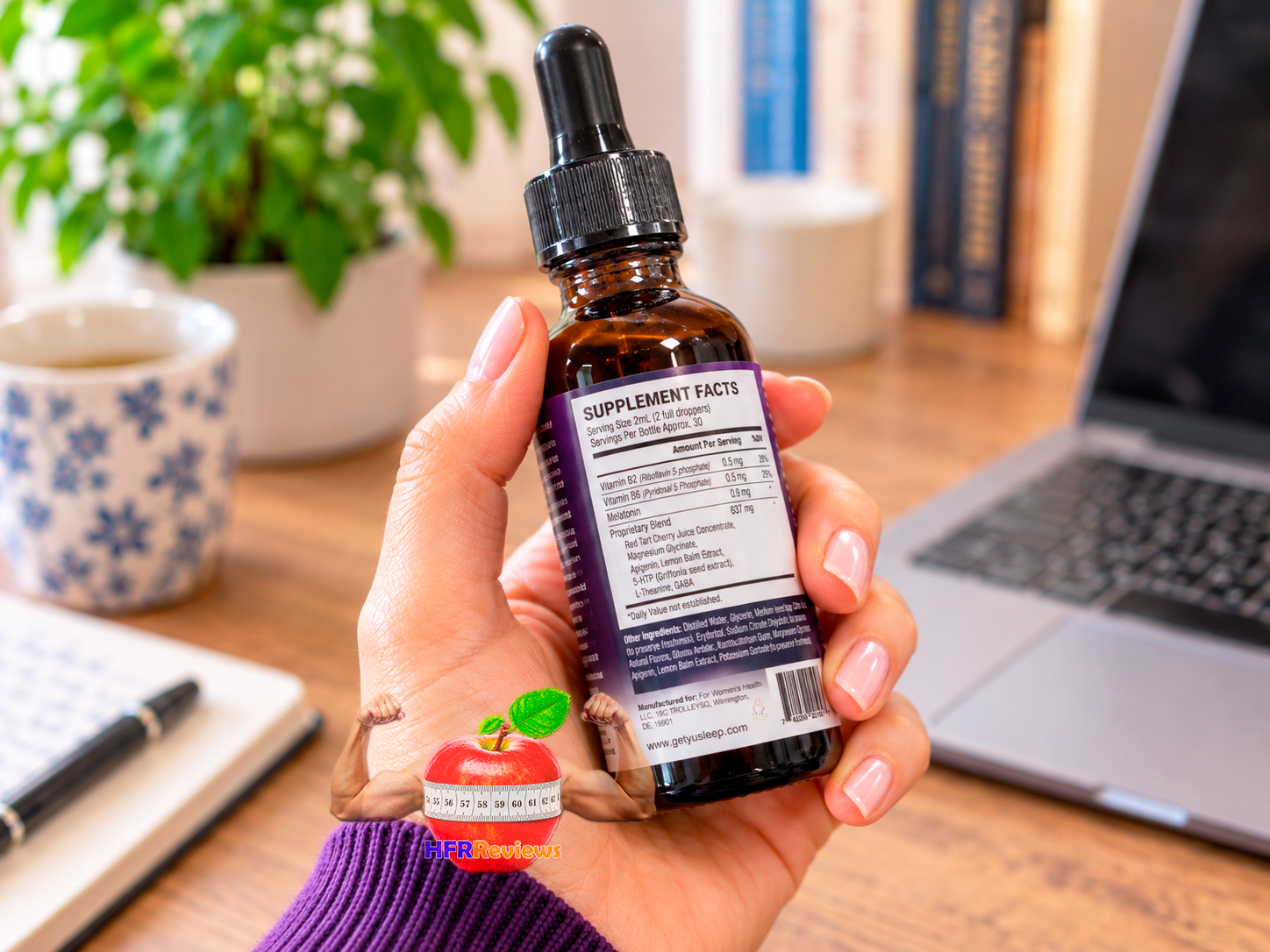
The ingredient list is where I start with any product, and it is where YuSleep makes its best case. Here is what each component is, what it is meant to do, and how strong the research behind it looks.
Melatonin (0.9 mg)
Melatonin is the hormone your body releases in response to darkness, and it helps set the timing of your sleep-wake cycle. The National Center for Complementary and Integrative Health (NCCIH) notes that research on melatonin supplements for sleep is mixed, with results depending on the population studied and the outcome measured, and that there is some support for easing jet lag. Many over-the-counter products deliver 3 mg to 10 mg per dose. At 0.9 mg, YuSleep sits at the gentle end of the range, which I consider a sensible choice for anyone who has felt groggy after larger doses. The trade-off is that a lower dose won’t suit everyone, and melatonin alone is rarely the whole answer. The practice guidelines the NCCIH cites also stop short of recommending melatonin on its own for chronic insomnia, which is one more reason to see it as a supportive tool rather than a cure.
It is also worth knowing that earlier marketing material for YuSleep described the formula as melatonin-free. The current official page and label list 0.9 mg per serving, so go by the label that comes with your bottle.
Vitamins B2 and B6 (0.5 mg each)
Both appear in their active coenzyme forms: riboflavin 5-phosphate (B2) and pyridoxal 5-phosphate (B6), covering 38% and 29% of the Daily Value. B6 helps the body convert tryptophan into serotonin, which is then used to make melatonin, so its place in a sleep formula makes biochemical sense. Direct evidence that these vitamins improve sleep is thin. The best-known B6 study looked at dream vividness and recall rather than sleep quality. I see them as supporting players that help the rest of the formula do its job, not as the reason to buy.
Red Tart Cherry Juice Concentrate
Tart cherries naturally contain small amounts of melatonin along with polyphenols. A handful of small studies, including pilot work in older adults with insomnia, have reported modest gains in sleep time or insomnia severity. The studies are small, and in YuSleep the cherry is part of a blend rather than a standalone dose, so I read it as a gentle, food-based contribution. Under standard labeling rules, ingredients in a proprietary blend are listed from most to least by weight, and red tart cherry juice concentrate comes first on the YuSleep label. That makes it the largest component of the blend.
Magnesium Glycinate
Magnesium takes part in hundreds of reactions in the body, including muscle relaxation and nerve signaling. Glycinate is a form bonded to the amino acid glycine, and it tends to be easier on the stomach than some other magnesium salts. Small trials, mostly in older adults or people with low magnesium intake, suggest it can ease insomnia symptoms. Because the amount per serving isn’t disclosed, I can’t say how much it contributes, but it is a well-chosen form.
Apigenin
Apigenin is a flavonoid found in chamomile, parsley and other plants. Laboratory research suggests it interacts with the same receptor system that calming medications target. Human trials of isolated apigenin are limited, and most of the human data come from chamomile extract. The official page calls it “nature’s gentle sedative,” which is a catchy phrase rather than a research conclusion. Still, I like seeing it here. Of all the blend ingredients, it is the one with the most promise relative to the evidence collected so far.
Lemon Balm Extract
Lemon balm (Melissa officinalis) belongs to the mint family and has a long history of traditional use for calming the nerves. Small human trials have reported lower anxiety and fewer sleep disturbances. One often-cited pilot study followed 20 volunteers with mild-to-moderate anxiety and sleep disturbances for 15 days. It was open-label, with no placebo group, so it points in a useful direction without settling the question. It suits the overall design of the formula, which leans toward relaxation rather than sedation.
5-HTP (from Griffonia Seed Extract)
5-HTP is an intermediate between tryptophan and serotonin. Because serotonin is used to make melatonin, 5-HTP’s role in a sleep formula is logical. Evidence for its effect on sleep is mixed and depends on dose. The main caution is about medication: people who take antidepressants or other drugs that raise serotonin activity should not combine them with 5-HTP without medical advice. I return to this in the safety section.
L-Theanine
L-theanine is an amino acid found in tea leaves, known for promoting calm without making you drowsy. Studies in healthy adults, typically using doses in the low hundreds of milligrams, have reported better sleep quality and lower stress. The official page also cites a study on a GABA and L-theanine mixture that reported shorter time to fall asleep. That study appears to be animal research, so I treat it as supportive rather than conclusive.
GABA
GABA is the brain’s main calming neurotransmitter. Whether GABA taken by mouth reaches the brain in meaningful amounts is still debated, and some researchers think it may act through the gut’s nervous system instead. A small crossover study in Japan found that about 100 mg of GABA shortened the time to fall asleep, while a 2020 systematic review of placebo-controlled trials concluded that the evidence for sleep benefits is still very limited. The evidence is early, so I count GABA as a promising extra rather than the foundation of the formula.
The Other Ingredients
The other-ingredients line on the label reads: distilled water, glycerin, medium invert syrup, citric acid, erythritol, sodium citrate dihydrate, natural flavors, gum arabic, xanthan gum and potassium sorbate. Citric acid, sodium citrate dihydrate and potassium sorbate are there to preserve freshness. The same line also repeats magnesium glycinate, apigenin and lemon balm extract, which already appear in the proprietary blend. The label doesn’t explain the repetition, so I can’t say what it means for the amounts of those three. Invert syrup and erythritol are sweeteners, which is part of why a liquid formula with this many botanicals can taste acceptable. If you watch your sugar intake closely, check the exact figures on the label that arrives with your order.
The Proprietary Blend: What to Know
The seven blend ingredients share 637 mg per serving, and the label does not break that down ingredient by ingredient. Proprietary blends are a legal and common labeling format, but they do limit how precisely a reviewer can judge dosing.
Here is a little arithmetic to put it in perspective. If the 637 mg were split evenly across seven ingredients, each would contribute about 91 mg. Blends are never split evenly, so some ingredients will be above that figure and others well below it. The label also repeats magnesium glycinate, apigenin and lemon balm extract in its other-ingredients line without saying why, which makes the picture for those three even less clear. Studies on L-theanine and GABA often use doses of 100 mg and up, and magnesium studies typically use more than a 637 mg blend could realistically deliver on its own. That tells me the formula should be read as a supportive, multi-ingredient approach rather than a collection of clinical-strength doses.
Is that a problem? For me it was a point of awareness, not a dealbreaker. Everything in the blend is disclosed by name, the total weight is stated, and the melatonin, which is the ingredient where dose matters most for tolerability, is broken out on its own line. My own results were good, and the label gave me enough information to make an informed choice. If you want to see per-ingredient amounts, you can ask [email protected]. I would simply prefer to see a full breakdown on future labels.
Does YuSleep Work? What the Research Supports
Two questions often get mixed together in any YuSleep review. The first is whether the ingredients in YuSleep have research behind them. The second is whether this exact combination has been tested in a clinical trial. The answer to the first is a qualified yes. For the second, I could not find a published trial of the finished formula, which is true of most supplements on the market.
At the ingredient level, the picture is encouraging but uneven. Melatonin has the longest research history, with mixed but meaningful findings. L-theanine and magnesium have small human studies pointing to better sleep quality or relaxation, especially in people who are stressed or short on magnesium. Tart cherry has small pilot data. GABA, lemon balm, apigenin and 5-HTP have earlier or more indirect evidence.
The official page lists 20 scientific references, and I went through them for this YuSleep review. A fair number are directly relevant: reviews on melatonin and sleep, a tart cherry study, work on GABA and L-theanine, and a general review of supplements and sleep quality. Others are more tangential, such as 5-HTP in people with Parkinson’s disease, 5-HTP for sleep terrors in children, a B6 study on dream recall, and a laboratory study of B6 under sleep deprivation. They help show how these nutrients behave in the body, but they don’t demonstrate that YuSleep will improve sleep in a healthy adult. I treat them as background, and I suggest you do the same.
Why do I still rate the product so highly? Because the formulation is coherent. It does not lean on a single mechanism. Melatonin supports timing. L-theanine, lemon balm, GABA and magnesium aim at relaxation. 5-HTP and B6 touch the pathway that leads from serotonin to melatonin. That kind of design is a reasonable bet for people whose sleep trouble has several causes, such as a busy mind, physical tension and an irregular schedule, which describes a lot of us. My results, described below, fit that picture. The manufacturer talks about “synergy” between the ingredients, and while I find the idea plausible, it remains a hypothesis for this specific formula.
Marketing Claims vs. Evidence
The official sales page speaks in strong language, so in this YuSleep review I sort its claims into three groups.
Well supported at the ingredient level. Melatonin helps regulate the timing of sleep. L-theanine is associated with relaxation. Magnesium is an essential mineral involved in nerve and muscle function. Tart cherry contains natural melatonin and polyphenols.
Plausible, but not proven for this formula. Falling asleep faster, waking less often, and feeling more refreshed in the morning are reasonable goals for a formula like this, and they match my experience. But no trial has measured them for YuSleep itself.
Claims I would not rely on. The page says full results take 3 to 6 months, that the effects continue after you stop (“a permanent fix”), that your sleep architecture is “reset,” that weight may normalize, that immunity improves and that lemon balm will “stop” 3 AM wake-ups by lowering cortisol. “Nano-enhanced” also goes unexplained, and the idea that these ingredients support adenosine buildup isn’t something I could connect to any of the listed components. No sleep supplement can promise a permanent change, and I would not buy on the strength of any of these statements.
None of this changes my rating in this YuSleep review. My score rests on the formula, the transparency of the label, the ease of use and my own three months with the product. But you deserve to know which claims to take with a grain of salt. Marketing copy on a sales page belongs to the company. The results I describe in this review are my own, and individual results vary.
If you have had trouble sleeping for a long time, a supplement should not be your only step. Persistent insomnia, loud snoring, restless legs or daytime sleepiness that doesn’t improve are all worth discussing with a doctor.
Testimonials and Customer Feedback
The official page features six customer testimonials, each marked “Verified Purchase.” They describe falling asleep faster, fewer 3 AM wake-ups, better mornings and, in one case, improved numbers on a sleep-tracking ring. The company adds that testimonials are not claimed to represent typical results, and I would read them the same way. They are anecdotes, and I can’t independently verify them.
Outside the official site, most of the YuSleep coverage I found reads like promotional press releases rather than an independent YuSleep review, so I did not rely on it. That makes your own judgment, and ideally your own trial, more important than usual.
The practical questions that tend to come up with any product sold this way are fairly predictable, and the policies answer most of them. Check the exact shipping fee at checkout. Understand that the smallest package is two months. Know the return conditions before you order, including who pays return shipping. And remember that supplements work differently for different people, so a strong story from one reader is encouraging, not guaranteed.
My YuSleep Review: Three Months of Real-World Use
I used YuSleep for three months, and this YuSleep review reflects that experience. I followed the directions on the label, and I paid attention to how my sleep and my days felt rather than expecting a dramatic overnight change.
The shift I could actually point to arrived at about the six-week mark. My sleep became better and more restful. The tiredness that used to follow me through the day went away. And I began waking up with a kind of alertness and freshness that I had not had for a while. It didn’t feel like being sedated or switched on artificially; it felt like I had slept properly.
I did not notice any side effects during the three months. My overall impression of the product is positive, and it is the main reason my rating is as high as it is.
One honest caveat: this is the experience of one person over one period of time, and I can’t say how much of it is down to the formula alone. Sleep is influenced by stress, schedule, diet and many other things. What I can say is that YuSleep fit easily into my evening routine, and that I would use it again.
YuSleep Side Effects and Safety: Who Should Avoid It
YuSleep is a multi-ingredient formula, and that is exactly why it deserves a careful read of the safety information. I did not experience any side effects, but I am one person, and the ingredients are active enough that some groups should check with a professional before using it.
Possible effects. The official materials state that YuSleep may cause drowsiness. Do not drive, operate machinery or do anything that needs full alertness after taking a serving. Melatonin can occasionally cause headache, dizziness, nausea or daytime sleepiness, and the NCCIH notes that research on long-term melatonin use is limited. 5-HTP can upset the stomach in some people. Magnesium in large amounts can loosen stools, though the quantity in this formula is not likely to cause that.
Who should talk to a doctor first.
- Women who are pregnant or nursing. Safety data for melatonin and several of the botanicals in these groups is lacking.
- Anyone under 18.
- People with a medical condition, especially one affecting sleep, mood, blood pressure or hormones. The NCCIH specifically advises medical supervision for melatonin use in people with epilepsy and in those taking blood thinners.
- Anyone taking prescription sleep aids, antidepressants or blood pressure medication. 5-HTP in particular can interact with drugs that act on serotonin, such as antidepressants, the pain medication tramadol and some migraine and cough medicines, and too much serotonin activity can be dangerous.
- Anyone already using other nighttime or mood-support products. Melatonin, 5-HTP and magnesium appear in many supplements, and combining them can push your total intake higher than any single label anticipated.
If an unexpected reaction occurs, stop using the product and seek medical advice. Also keep in mind that sleep supplements are meant to support healthy sleep habits, not to treat sleep disorders such as sleep apnea or chronic insomnia. If your sleep problems are severe or long-lasting, a medical evaluation should come first.
How to Take YuSleep
The directions are simple. Take one serving, which is two full droppers (2 mL), about 30 minutes before bed. There is no need to take more, and more is not better. If a serving feels like too much at first, speak with your healthcare provider rather than guessing at a different amount.
Consistency matters more than anything else with this kind of product. Take it at roughly the same time every night, and give it a fair trial. The manufacturer suggests some people feel a difference within days and recommends 3 to 6 months for the full effect. In my case, the noticeable improvement arrived at about six weeks, so if you don’t feel much in the first couple of weeks, that doesn’t necessarily mean it isn’t working.
A supplement does its best work alongside habits that already favor sleep: a regular bedtime, a dim and cool bedroom, less caffeine in the afternoon and fewer screens in the last hour of the day. YuSleep slotted easily into my own routine, and I think that is a big part of why I was able to stay consistent for three months.
YuSleep Price, Packages, and Bonuses
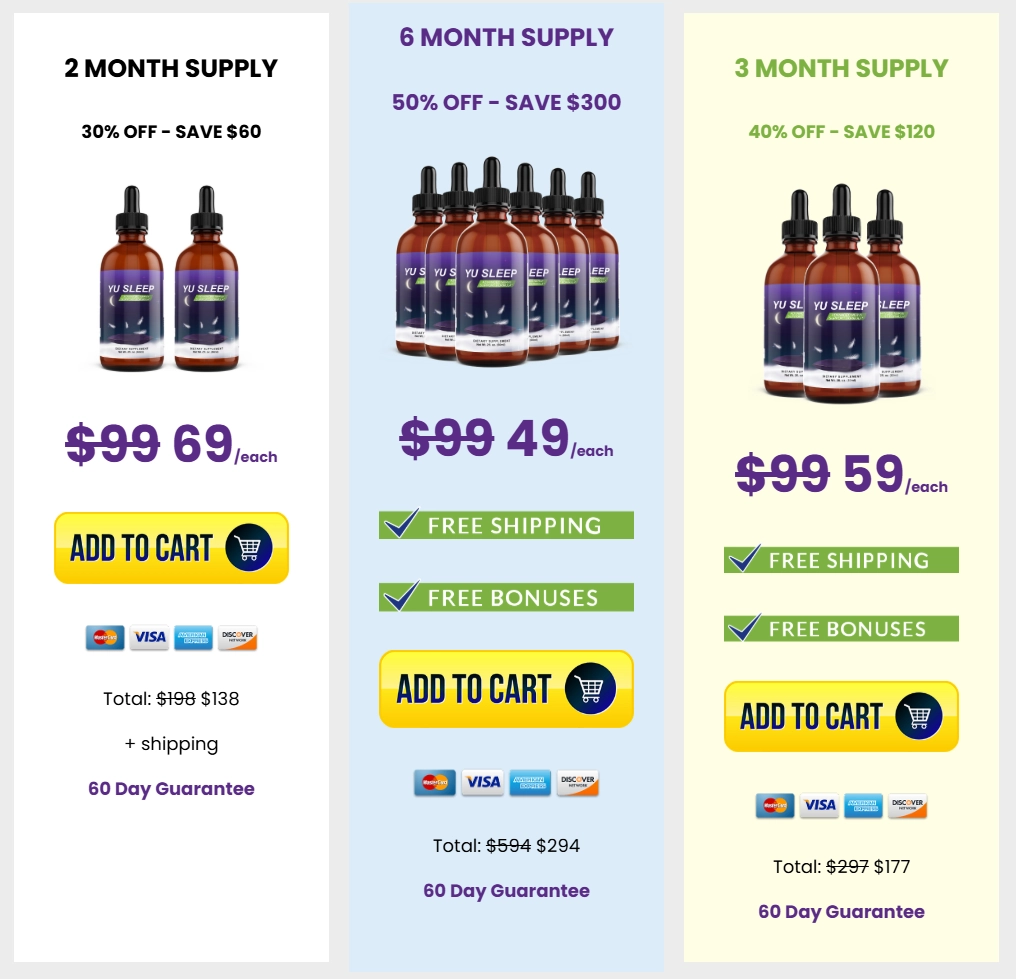
YuSleep is available in three packages on the official website. The listed regular price is $99 per bottle, and each package comes with a discount.
Package | Total price | Per bottle | Approx. cost per night | Shipping | Bonuses |
|---|---|---|---|---|---|
2 months (2 bottles) | $138 (30% off) | $69 | about $2.30 | Charged separately | Not listed |
3 months (3 bottles) | $177 (40% off) | $59 | about $1.97 | Listed as free on 3 bottles | Included |
6 months (6 bottles) | $294 (50% off) | $49 | about $1.63 | Free | Included |
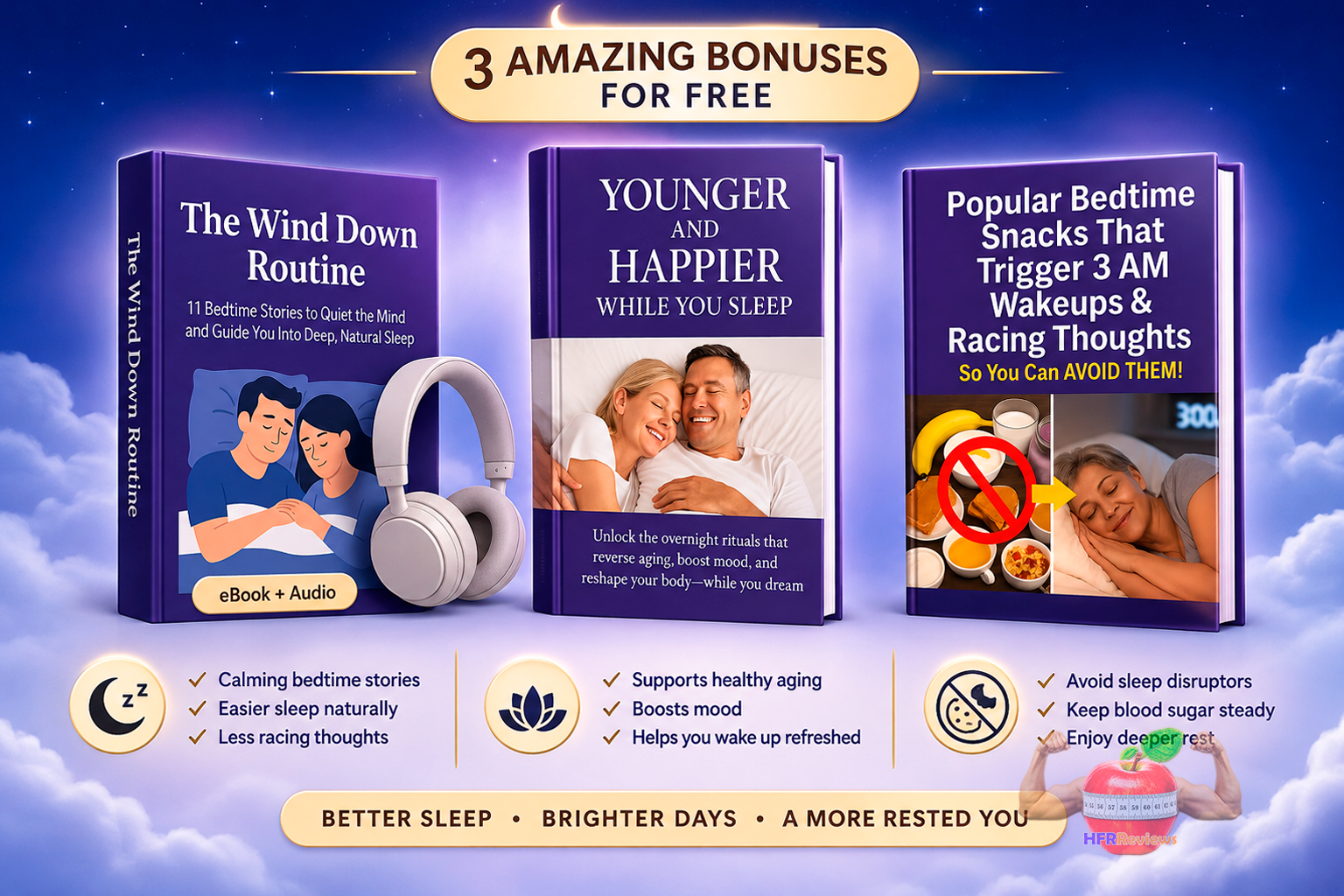
The 3- and 6-month packages come with three digital bonuses: a collection of 11 bedtime stories in eBook and audio form, an eBook on nightly rituals called Younger and Happier While You Sleep, and a guide to bedtime snacks that can interfere with sleep. I haven’t treated these as a reason to buy, since I rate the supplement itself, but they are a pleasant extra, and the stories in particular could suit a wind-down routine.
My YuSleep review comes down to a straightforward point about value. If you have decided to give YuSleep a proper trial, the 6-month package offers the lowest cost per night by a clear margin. Three months is the length of time I used it, and it is a reasonable middle option. The 2-month package costs the most per night and doesn’t include the bonuses, so it makes sense mainly if you want the smallest commitment. Prices and promotions can change, and the page uses “while supplies last” language, so check the current figures on the official site before ordering.
YuSleep Money-Back Guarantee: What to Know Before You Order
Every package is covered by a 60-day money-back guarantee, which is one of the things I like about the offer. It lets you test the product without much financial risk. To make the most of it, here is how the process works according to the published policy:
- Contact support at [email protected] within 60 days of the purchase date and receive approval before sending anything back.
- Return all bottles from the order, including used or empty ones, with your order number and tracking information.
- Return shipping is your responsibility, and shipping and handling deductions from the refund may apply.
- The guarantee applies once per customer.
There is one practical point to plan around. The official page suggests that the full benefits build over 3 to 6 months, while the guarantee window is 60 days. My own improvement showed up at around six weeks, which falls inside the window, but the timing will differ for each person. If you decide to use the guarantee, reach out early, keep every bottle, and keep your tracking information. Orders are processed through ClickBank, so order-related questions can go through them, while product questions go to the YuSleep support address.
YuSleep vs. Other Sleep Supplements
Where does YuSleep sit among the alternatives? Here is how I think about the main categories in this YuSleep review.
Option | Typical approach | How YuSleep compares |
|---|---|---|
Melatonin-only tablets or gummies | A single ingredient, often 3 mg to 10 mg | YuSleep uses a lower dose (0.9 mg) and adds relaxation-oriented ingredients |
Magnesium and L-theanine capsules | Two relaxation-focused ingredients, often with disclosed doses | Doses are clearer on these products; YuSleep covers more pathways but with an undisclosed blend |
Herbal teas and tinctures | Gentle, plant-based, variable strength | YuSleep offers a measured, consistent serving |
Antihistamine-based sleep aids | Drowsiness through a medication effect | A different category altogether; those products are more likely to cause next-day grogginess |
The case for YuSleep is a combination of things: a modest melatonin dose, several well-known relaxation ingredients, a liquid format and a straightforward nightly routine. The trade-offs are also real. It costs more per night than a basic melatonin product, the blend doses are not itemized, and a formula with ten ingredients means more things to check against your medications. For me, the broader formula and the way I felt in the morning were worth it.
Pros and Cons
Pros
- Ten-ingredient formula that covers timing, relaxation and the serotonin-to-melatonin pathway
- Melatonin dose stated on the label, at a modest 0.9 mg
- Liquid format with a simple dose of two droppers
- Active forms of vitamins B2 and B6
- 60-day money-back guarantee
- Strong value on the 6-month package, with free shipping and bonuses
- No side effects in my three months of use
Cons
- Seven ingredients share a 637 mg proprietary blend without individual amounts
- Smallest package is two months, so there is no single-bottle trial
- Shipping fee for a single bottle is stated inconsistently ($14.95 vs. $9.95)
- Return shipping is paid by the customer, and all bottles must be sent back
- Some marketing claims on the sales page go further than the evidence supports
- Not suitable for everyone, including people on certain medications
Final Verdict: My YuSleep Review Rating and Recommendation
My rating for YuSleep is 9.3 out of 10, and I recommend it.
Here is how I arrive at that number in this YuSleep review. The formula is thoughtfully built and covers the main routes through which a supplement can support sleep. The label is clearer than most, particularly about melatonin. The product is easy to use, the guarantee reduces risk, and the 6-month package is priced sensibly. Most importantly, it worked for me. After about six weeks I could feel my sleep getting better and more restful, the fatigue I had been dragging through my days went away, and I woke up alert and fresh. Three months in, I had no side effects to report.
The points that keep it from a perfect score in my YuSleep review are the undisclosed blend amounts, a minimum purchase of two months, a few inconsistencies in the shipping information and marketing language that is stronger than the science supports. None of them is a dealbreaker, but they are worth knowing about.
If you are ready to try it, the safest way is to order from the official website at getyusleep.com, where the current packages, prices and guarantee terms are listed, and to check with your healthcare provider first if you take medication or have a medical condition. Choose the package that fits your plans, take it consistently, and give it the time it needs.
Have you tried YuSleep? I would love to hear about it. Tell us in the comments below how long you took it, what changed for you and whether you noticed anything unexpected. Real experiences help other readers decide, and your own YuSleep review in the comments might be the one that someone else needed to read.
YuSleep Review FAQ: Common Questions
Does YuSleep contain melatonin? Yes. The current label lists 0.9 mg of melatonin per serving. Some older marketing described the formula as melatonin-free, so always check the label on your bottle.
How do I take it? Take two full droppers (2 mL) about 30 minutes before bed.
How long does it take to work? It varies. The manufacturer says some people notice changes within days and recommends 3 to 6 months for the full effect. I noticed a clear improvement at around six weeks.
Can I take it every night? The directions describe nightly use. Long-term safety data for melatonin is limited, so if you plan to use it for an extended period, talk with your healthcare provider.
Can I take YuSleep with other supplements or medication? Check with a healthcare professional first, especially if you take prescription sleep aids, antidepressants or blood pressure medication, or other products that contain melatonin, 5-HTP or magnesium.
Is it safe during pregnancy or while nursing? Safety data for these groups is lacking, and the manufacturer advises consulting a healthcare professional before use.
Where is the best place to buy YuSleep? The official website, getyusleep.com. Buying there gives you access to the 60-day guarantee and current package pricing.
What if it doesn’t work for me? Contact support at [email protected] within 60 days of purchase, get approval, and send back all bottles to request a refund.
References
Reviewed November 2, 2026.
- YuSleep official website: sales page, FAQ, package pricing, shipping policy and the 20 references listed by the manufacturer.
- YuSleep Supplement Facts label: serving size, ingredient amounts, proprietary blend and other ingredients.
- Yu Sleep press release, GlobeNewswire, August 3, 2026: ingredient disclosure, return policy terms and safety guidance.
- National Center for Complementary and Integrative Health (NCCIH), Melatonin: What You Need To Know (last updated May 2024).
- U.S. Food and Drug Administration, dietary supplement labeling guidance on proprietary blends.
- Mount Sinai Health Library, 5-Hydroxytryptophan (5-HTP).
- Pigeon WR, Carr M, Gorman C, Perlis ML. Effects of a tart cherry juice beverage on the sleep of older adults with insomnia: a pilot study. Journal of Medicinal Food. 2010;13(3):579–583. Full text
- Abbasi B, et al. The effect of magnesium supplementation on primary insomnia in elderly: a double-blind placebo-controlled clinical trial. Journal of Research in Medical Sciences. 2012;17(12):1161–1169. PubMed
- Hidese S, et al. Effects of L-theanine administration on stress-related symptoms and cognitive functions in healthy adults: a randomized controlled trial. Nutrients. 2019;11(10):2362. PubMed
- Yamatsu A, et al. Effect of oral γ-aminobutyric acid (GABA) administration on sleep and its absorption in humans. Food Science and Biotechnology. 2016;25(2):547–551. Full text
- Effects of oral gamma-aminobutyric acid (GABA) administration on stress and sleep in humans: a systematic review. Frontiers in Neuroscience. 2020;14:923. Record
- Cases J, et al. Pilot trial of Melissa officinalis L. leaf extract in the treatment of volunteers suffering from mild-to-moderate anxiety disorders and sleep disturbances. Mediterranean Journal of Nutrition and Metabolism. 2011;4(3):211–218. Full text
*This article is for general educational purposes and is not a substitute for professional medical advice, diagnosis or treatment. Individual results vary.